

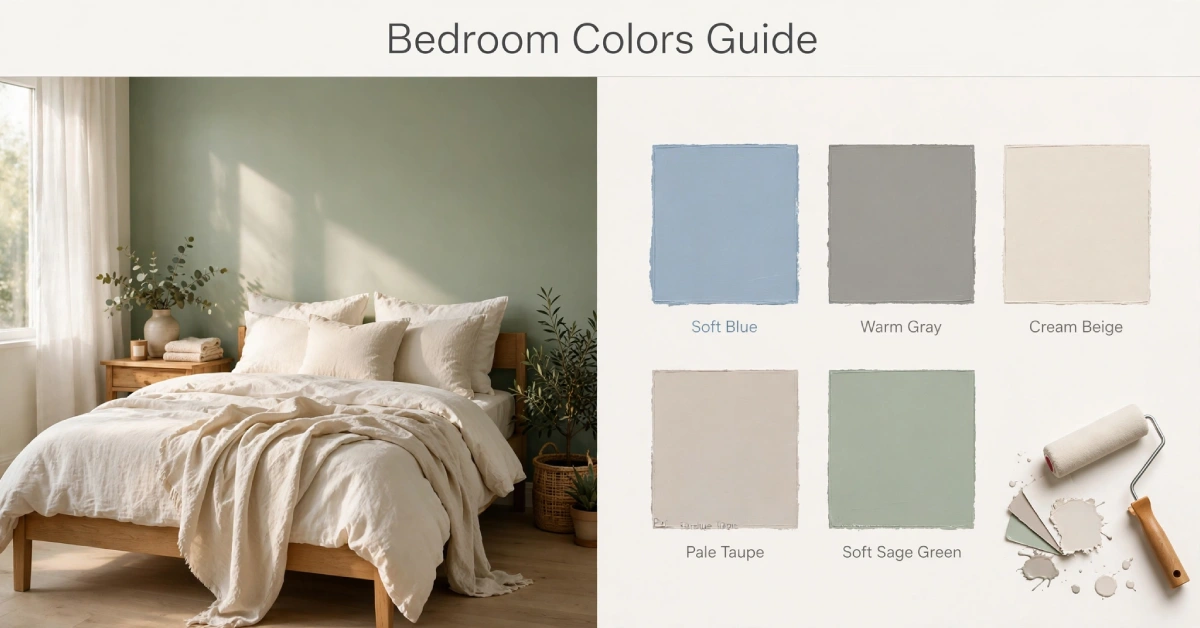
The best bedroom colours balance personal preference with room function. Warm neutrals like beige and greige create cosiness, while cool tones like soft blue and sage green promote calm. Consider your room’s natural light, existing furniture, and the mood you want before selecting paint colours for your bedroom space.
Your bedroom is a personal retreat, and colour sets the tone for how you feel in that space. The right bedroom colours can help you sleep better, feel more relaxed, or wake up energised. The wrong choice might leave you feeling restless or disappointed every time you walk in.
Choosing bedroom colours isn’t as simple as picking your favourite hue. You need to think about lighting, space size, mood, and how colours work with what you already own. This guide walks you through the decisions you need to make and shows you colors that work in real bedrooms.
Understanding Warm vs. Cool Bedroom Colours
Bedroom colours fall into two main categories: warm and cool. Each affects how you feel and how your room looks.
Warm colours include beige, cream, soft orange, warm grey, and rust. These colours make a room feel inviting and cosy. They work especially well in bedrooms that don’t get much sunlight, because they add warmth to naturally dim spaces. Warm tones also make rooms feel smaller and more intimate, which many people prefer for sleeping areas.
Cool colours include blue, green, purple, and cool grey. These colours create a calm, peaceful feeling. They tend to make rooms feel more spacious and airy. Cool bedroom colours are popular for people who want a serene atmosphere or who live in warm climates where you want the room to feel fresh.
Neither type is better. The best choice depends on your room’s light, your personal style, and the mood you want to create.
How Room Size and Light Affect Colour Choice
The size of your bedroom and how much natural light it gets should guide your colour decisions. These two factors change how colours look on your walls.
Small bedrooms work better with light, cool colours. Light shades make walls seem farther away, which makes the room feel larger. If your small bedroom has a warm colour instead, it can feel cramped and closed in. A soft blue or pale green opens up the space without making it feel cold.
Large bedrooms can handle deeper, richer colours. A dark navy or deep sage green won’t make a large bedroom feel small. In fact, richer tones add cosiness and sophistication to larger spaces. You have more room to take colour risks.
Natural light is just as important. A bedroom with lots of morning sun can handle deeper, more saturated colours because the light balances them out. A bedroom with little natural light needs lighter shades to avoid feeling dark and depressing. If you choose a darker colour in a low-light room, make sure to add adequate lighting with lamps and fixtures.
Test your colours with samples first. Paint a large swatch on your wall and watch how it looks at different times of day. Morning light, afternoon light, and evening artificial light will all show you different sides of the same colour.
Bedroom Colors and Sleep Quality
Colour affects your brain, and your bedroom colour can influence how well you sleep. Research on colour and sleep shows that cooler tones, especially blue and green, support better sleep. These colours lower heart rate and blood pressure, which helps your body relax. Warmer colours like red and orange can stimulate the brain and make it harder to wind down.
That doesn’t mean you can’t use warm colours in your bedroom. Many people sleep perfectly well in warm, neutral bedrooms. What matters most is that you personally find the colour calming. If warm grey makes you feel peaceful, that’s what you should choose, regardless of general guidelines.
If you struggle with sleep, try bedroom colours in the blue or green family first. Soft blues, soft greens, and light greys all support relaxation without feeling cold or clinical.
Popular Bedroom Colour Combinations
Most successful bedrooms use one main wall colour plus one or two accent colours. Here are combinations that work well:
- Soft white walls with a grey accent wall and natural wood furniture
- Pale blue walls with white trim and brass lighting fixtures
- Warm beige walls with sage green accents and linen bedding
- Soft grey walls with dusty blue accents and brass or gold details
- Pale cream walls with blush or mauve accents and warm metal finishes
- Light grey-green walls with white bedding and natural textures
- Warm grey walls with deep teal accents and dark wood furniture
The key to any combination is balance. Use your brightest or darkest colour on just one wall or in accents. Keep the main walls lighter and more neutral so your room doesn’t feel overpowering.
Bedroom Colors for Different Styles
Your bedroom style should influence your colour choice. Here’s how different design styles approach colour:
Modern bedrooms typically use neutral walls with one bold accent colour. Think white, grey, or black walls with a pop of deep blue or emerald green. Modern style values simplicity, so limit yourself to two or three colours maximum.
Traditional bedrooms often use warm, muted tones like taupe, cream, soft gold, or warm grey. These colours feel established and comfortable. Many traditional bedrooms combine these wall colours with darker wood furniture.
Coastal and beach-inspired bedrooms use soft blues, sandy tans, and whites. These colours create a relaxed, vacation-like atmosphere. Pair them with natural textures and light wood furniture to complete the look.
Farmhouse and rustic bedrooms favour warm neutrals: cream, soft tan, grey, and soft white. Add wood beams, vintage furniture, and natural linens to emphasise the rustic feel.
Minimalist bedrooms use very light or very neutral colours: soft white, light grey, or warm white. The goal is calm simplicity, so stick to one main colour with minimal accents.
Bedroom Colours and Existing Furniture
Your existing bedroom furniture should influence your colour choice. You don’t need everything to match perfectly, but colours should work together.
If you have dark wood furniture, choose colours that contrast with it. Soft blue, grey, or warm white will make dark wood furniture stand out and look intentional. Avoid colours that are too close to your furniture’s tone, or the room will look muddy.
If you have light wood furniture, you have more flexibility. Light woods work with almost any wall colour. Soft warm tones enhance the wood’s natural warmth, while cool tones create modern contrast.
For upholstered furniture like a headboard or bench, match your wall colour to the overall tone, not the exact shade. If your headboard is soft grey, don’t choose the same grey for walls. Go lighter or warmer or cooler to create visual separation.
Metal furniture like brass beds or iron frames can work with nearly any colour. Brass looks rich against cool colours and warm against neutral tones. Iron or dark metal works with bold colours and soft pastels alike.
Specific Bedroom Colours Worth Trying
If you want specific colour recommendations, these bedroom colours work well for most people:
Soft Sage Green: A muted, greyed-down green that feels calming without being cold. It works in rooms with medium natural light and pairs well with warm or cool accents.
Warm White or Cream: The safest choice for any bedroom. Warm whites feel cosy, and most other colours in your room will coordinate with them. Use texture and accessories to add interest.
Soft Blue-Gray: This colour bridges warm and cool tones. It works in bright and dim rooms alike. It’s sophisticated enough for modern spaces but comfortable enough for traditional rooms.
Pale Taupe: A neutral that’s slightly warmer than grey but less yellow than beige. Taupe works especially well if you have both warm and cool-toned furniture.
Soft Blush or Mauve: These gentle purples create a sophisticated, calming space. They work best in medium to well-lit rooms and pair nicely with brass or gold finishes.
Warm Grey or Greige: Greige is grey plus beige, creating warmth without pure white. It’s versatile enough for any style and complements most furniture colours.
Practical Steps to Choose Your Bedroom Colour
Follow this process to make a colour choice you’ll love:
- Consider your room’s light. North-facing rooms need warm colours. South-facing rooms can handle cooler or deeper tones.
- Think about your mood goal. Do you want calm and peaceful, cosy and warm, or bright and energised? Your answer should steer you toward either cool or warm tones.
- Look at your existing furniture. Note the main colours you already have. Your bedroom colour should either complement or contrast with these intentionally.
- Identify your style. Are you modern, traditional, coastal, rustic, or minimal? Choose colours typical of that style.
- Get samples. Buy paint samples in the colours you’re considering. Paint large swatches on your wall.
- Observe over time. Look at your samples in morning light, afternoon light, and artificial light. Live with them for a few days.
- Decide and commit. Choose the colour that makes you feel the way you want to feel in your bedroom.
Conclusion
Choosing bedroom colours is deeply personal. Guidelines about light and psychology are helpful, but ultimately, you should select colours that make you happy. You’re the one who sleeps in your bedroom and sees those walls every day.
Use this guide to narrow your options, but trust your instincts when you find a colour that feels right. Colour samples, live with them, and choose the colour that genuinely makes you feel good. A bedroom in your perfect colour beats a theoretically perfect colour that doesn’t colour you.
FAQs
What’s the most popular bedroom colour?
Neutral colours, especially soft white, warm grey, and beige, are the most popular bedroom colours. These work with any style and any existing furniture. They’re also the easiest colours to change if your taste shifts later.
Can I use bold colours in a small bedroom?
Yes, but carefully. Deep jewel tones like emerald or sapphire can work in small bedrooms if your room has good natural light. Avoid very bright or very dark colours in small spaces with poor lighting, as these can make the room feel cramped.
How do I make a north-facing bedroom feel warm?
Paint walls in warm white, cream, warm grey, or soft taupe. These colours reflect light and add warmth to naturally cool light. Avoid pure grey or blue unless you like the cool feeling. Add warm lighting with dimmable bulbs and table lamps to increase the cosy factor.
What colour helps you sleep best?
Research studies consistently show that soft blue and soft green support better sleep. However, the colour that helps you sleep best feels personally calming to you. If soft grey makes you relaxed, that’s your best choice.
Should I paint all walls the same colour?
Most bedrooms work better with all four walls the same colour. However, you can paint one accent wall a different shade or a coordinating colour. Keep accent walls simple; one is usually better than multiple.
How long does bedroom paint last?
Bedroom paint typically lasts 3 to 5 years before it needs refreshing. High-quality paint in low-traffic bedrooms can last longer. If your room gets a lot of wear or direct sunlight, repaint sooner.