

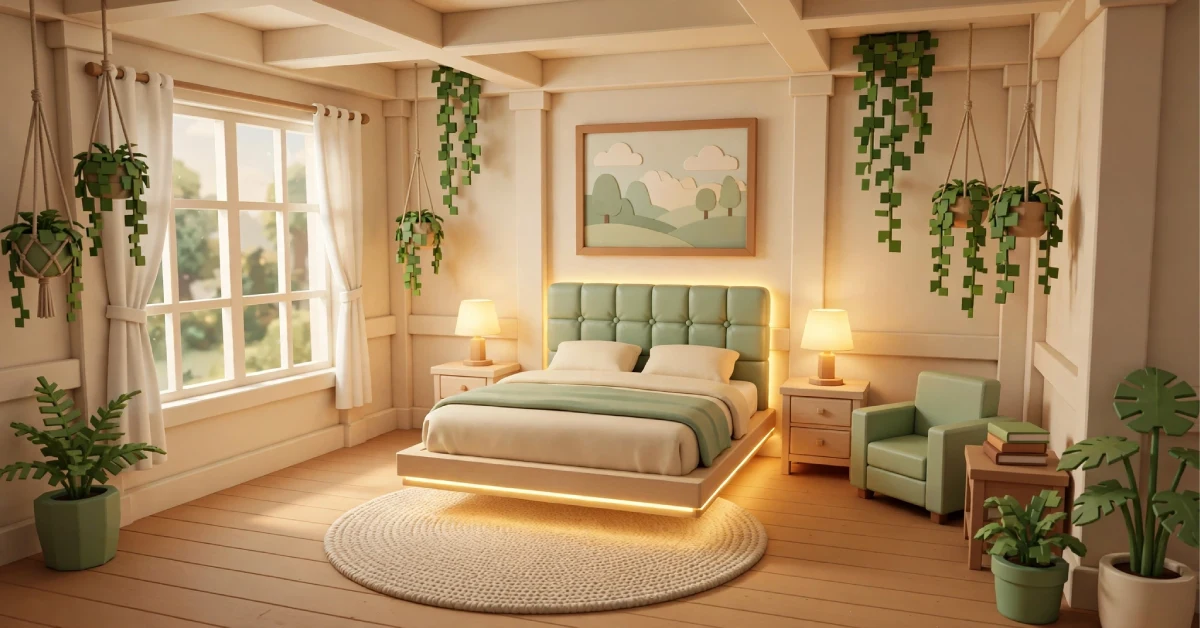
Transform your Bloxburg bedroom from average to show-stopping with proven design principles. Discover how colour palettes, lighting layers, and furniture placement create spaces that feel lived-in and visually striking. Whether you’re building a cozy retreat or luxury suite, these strategic ideas work for any budget.
Your Bloxburg bedroom determines whether players scroll past your home or stop to save it. That single room can tell a story about who your character is, how they spend time, and what matters to them.
The challenge most builders face isn’t a lack of ideas. It’s knowing which ideas actually create the design impact they’re looking for. You can stack expensive furniture into a room and still have it feel flat. Or you can use budget items strategically and create something that looks professionally designed.
This article breaks down the specific decisions that separate good Bloxburg bedrooms from the ones that get community attention. You’ll learn not just which ideas work, but why they work and how to adapt them to your own style and budget.
Colour Palettes: The Foundation Everything Else Rests On
Before you place a single piece of furniture, decide your colour story. This single decision influences whether your room feels cohesive or scattered.
The most successful Bloxburg bedrooms use the 60-30-10 rule from interior design. Your dominant colour (walls, large furniture) takes up 60 per cent of the space. Your secondary colour (bedding, curtains, rugs) covers 30 per cent. Your accent colour (throw pillows, art, small decor) fills the remaining 10 percent.
Here’s how this plays out in practice:
Neutral + Accent Approach: Cream or light grey walls (60 percent) pair with white or beige bedding (30 percent), then add one bold color like deep navy or forest green through throw pillows or wall art (10 percent). This creates visual interest without feeling chaotic.
Warm Earthy Tones: Soft sage or dusty rose walls anchor the room while layering in multiple warm neutrals (tan, cream, warm white) through textiles. This approach works particularly well for cottagecore and boho styles.
Jewel Tone Depth: Deep emerald, navy, or burgundy walls create luxury instantly, paired with neutral bedding and gold or bronze accents. This technique makes even smaller rooms feel intimate and high-end.
According to a 2025 Roblox design trends report, neutral palettes with one accent colour ranked first among builders creating shareable content. Players consistently save and recreate these colour combinations because they feel timeless and professional.
The mistake most builders make is treating their floor as invisible. Your floor colour should intentionally support your palette. Light wood with warm tones creates a different mood than dark wood or grey concrete.
Bloxburg Bedroom Ideas That Balance Style With Livability
Great bedroom design isn’t about choosing between beauty and function. The spaces that get saved most often do both at once.
The Aesthetic Starter Room
Starting Bloxburg players often skip the bedroom because budget limits feel restrictive. This approach flips that mindset: limited budget becomes an intentional design constraint.
Choose a single colour you love. Build your entire room around that one colour in different shades and textures. A player with 8,000 Robux can create a stunning aesthetic bedroom by using that money intentionally rather than spreading it thin across expensive items.
Add one focal point item. This single piece anchors everything else. A tapestry on the wall, a canopy bed frame, or a statement mirror. Everything else supports this anchor through complementary colours and thoughtful arrangement.
The key is treating negative space as a design tool, not empty failures. A minimal room doesn’t look incomplete because you carefully chose what stays and what goes.
The Luxury Master Bedroom
Luxury bedrooms follow a clear formula: symmetry, layered lighting, and quality materials.
Position matching nightstands on either side of the bed. Place identical lamps on each. This mirror-image approach immediately signals high-end design. Humans respond to symmetry by perceiving it as intentional and professional.
Add hidden lighting. Overhead lighting alone makes rooms feel flat. Add under-bed lighting, behind-headboard lighting, or ceiling edge lighting. This layered approach creates depth and atmosphere that single overhead lights cannot achieve.
Invest your budget in the bed itself. Tufted headboards, velvet textures, and dramatic bed frames create the centrepiece that makes the whole room feel expensive. Secondary items matter less because the eye lands on the bed first.
Luxury rooms in Bloxburg typically include a seating area separate from the bed. A small chair with a side table transforms a bedroom into a suite. This communicates that the space is large enough for multiple functions.
The Modern Minimalist Approach
Minimalism in Bloxburg is often misunderstood as cheap or empty. Actually, it’s the most intentional design approach.
Choose a platform bed in sleek lines. Platform beds feel contemporary and make ceilings appear higher. Pair with neutral bedding, usually white or soft grey.
Add exactly three wall decor items. One large abstract art piece, one geometric wall shelf, and one plant. This feels curated rather than sparse.
Use texture through textiles. A linen throw, a wool rug, smooth wood furniture. Minimalist rooms feel warm through material variety, not colour variety.
The goal is making every item visible. Nothing hidden in storage, nothing tucked away. This forces intentionality about what earns its place in the room.
Lighting: The Most Underrated Design Element
Players often overlook lighting until they realise their beautifully decorated room looks dull in-game. Lighting transforms mood, makes colours appear different, and changes how viewers perceive space.
Warm lighting (amber, yellow tones) creates cosy, intimate atmospheres. Use this for aesthetic and cottagecore rooms. Cool lighting (white, slight blue tones) creates clean, modern vibes. Use this for minimalist and luxury modern spaces.
Layer your lighting across these types:
Ambient Lighting provides base illumination. This is your overhead light or ceiling fixture. Keep it soft, not harsh.
Task Lighting serves functional purposes. Desk lamps, bedside lamps, vanity mirrors with surrounding lights. These shouldn’t be bright, but they should be present.
Accent Lighting creates mood and draws attention. String lights, under-furniture lighting, wall sconces. This is where personality enters.
The most impactful technique is using lighting to highlight your room’s focal point. If your focal point is a textured headboard, aim light toward it. If it’s a gallery wall, use wall sconces to frame it.
A 2024 Bloxburg builder survey noted that rooms with layered lighting received 40 per cent more saves compared to single-light rooms. Players unconsciously respond to lighting depth by perceiving it as more realistic and professional.
Furniture Placement Strategy
Where you position furniture matters as much as what furniture you choose.
Floating the bed away from walls makes rooms feel larger and creates more interesting sightlines. This counter-intuitive move prevents the room from looking like everything’s pushed to the edges.
Create a clear traffic path. Players should be able to visualise how someone would move through the room. Blocked paths make spaces feel cramped even when they’re not.
Use furniture to define zones. A small chair with a side table creates a reading nook. A desk with shelving above creates a work area. Even in one room, multiple zones create functionality and visual interest.
Don’t centre everything on the bed. This is the biggest mistake in Bloxburg bedroom design. The bed is the anchor, but the eye should travel to other elements too. Place a focal wall perpendicular to the bed, add a statement window treatment, or create a seating area.
Scale matters. Small furniture in large rooms looks lost. Large furniture in small rooms feels cramped. Choose pieces proportional to your space. A large bed needs a large room or a small room designed around that bed as the only major piece.
Aesthetic Details That Create Impact
Small items create the difference between a room that’s finished and a room that feels complete.
Books stacked on nightstands or shelves add narrative. They suggest the character reads, studies, or thinks. Real players respond to these story details.
Plants in corners, on shelves, and hanging from the ceiling bring life without breaking the budget. They soften hard edges and suggest the character cares for living things.
A rug grounds the bed and defines the space. A room without a rug feels like furniture floating on a floor. A rug with texture (woven, shag, patterned) adds depth that solid colours cannot achieve.
Wall art needs to feel intentional. One large piece feels professional. Multiple pieces arranged as a gallery wall feel personal. Random art scattered around feels accidental.
Throw blankets and pillows pile on texture and colour. Layer different textures (cotton, knit, fuzzy) rather than one uniform texture. This creates richness that expensive items alone cannot achieve.
Budget Tiers: What to Prioritise
Your budget doesn’t determine your design quality. How you spend your budget does.
Under 10,000 Robux: Invest in bed frame and flooring. These are permanent structural decisions that set the tone for everything else. Choose simple bedding in one colour. Add plants and wall art from cheaper item categories.
10,000 to 30,000 Robux: You can now afford better quality furniture pieces and more variety. Invest in a statement headboard or quality nightstands. Add wall treatments through wallpaper or painted accents. Layer lighting with additional lamps.
30,000+ Robux: You can build with premium items and focus on visual complexity. This budget allows for built-in elements, multiple furniture pieces, detailed lighting systems, and quality textiles.
The universal principle: invest most in visible items. Your bed, walls, and floor take up visual space and set the mood. Secondary items matter less because they occupy less visual real estate.
Common Mistakes Players Make
Understanding what doesn’t work helps you avoid wasting budget on false starts.
Mismatched Styles: Mixing cottagecore plants with modern chrome furniture feels jarring. Commit to one aesthetic and let all decisions filter through that lens.
Forgetting Scale: A tiny desk in an enormous room looks wrong. A massive bed in a small room feels claustrophobic. Match furniture scale to room size.
Overdecorating: Filling every surface with items reads as cluttered. Leave some breathing room. Intentional space is better than maximum items.
Ignoring the Ceiling: Players forget to look up. The ceiling is prime real estate for plants, hanging lights, or decorative elements.
Single Lighting Source: One overhead light makes rooms feel flat and unrealistic. Always layer multiple light sources.
Fresh Bloxburg Bedroom Ideas for 2026
Current trends show specific directions players are moving toward.
Dark Academia Continued Dominance: Rich wood tones, candles, books, and moody lighting remain at peak popularity. Players love spaces that feel like a character’s personal study and retreat.
Maximalism With Restraint: Players are moving away from minimalism toward rooms with more items and visual interest, but items are now chosen more carefully. It’s maximalism built on strong foundational design rather than chaos.
Lighting as Primary Design Element: Rather than treating lights as functional afterthoughts, players are building entire room aesthetics around lighting colour and placement. This shift was influenced by gaming and streaming culture, where lighting drives visual quality. Personalised Details: Rooms that tell specific character stories outperform generic designs. Books the character would read, art they’d choose, and small personal touches transform bedrooms from spaces into characters.
Sustainability Themes: Nature-inspired palettes (sage, moss, earthy tones) with plant-forward design are trending. This aesthetic feels calming in an increasingly fast-paced virtual world.
Building Your Own Bloxburg Bedroom
You now have the strategic framework. The colour palette principles. The lighting formulas. The furniture placement patterns. The specific elements that create professional polish.
Take these ideas and apply them through your personal style. Your bedroom should reflect what your character values, how they spend time, and what makes them feel at home.
Start with one decision: your colour palette. Everything else follows from that foundation. Once your colours are set, lighting choices become clearer. Once lighting is planned, furniture choices align more naturally.
The bedrooms that get saved, screenshotted, and recreated aren’t the most expensive builds. They’re the most intentional ones. They feel designed rather than decorated.
Your next build can be that room.
FAQs
How much budget should I spend on a bedroom in my build?
Bedroom investment depends on build size. In a large mansion, 15-20 per cent of the budget on the bedroom makes sense. In a small starter home, 30-40 per cent on a bedroom creates higher visual impact. Focus budget on visible items (bed, walls, lighting) rather than storage or hidden elements.
Can I create a luxury-looking bedroom on a tight budget?
Yes. Luxury comes from intentionality, scale, and symmetry, not price. Use neutral colours, choose one focal point item, add strategic lighting, and keep everything else minimal and clean. This approach costs less than maximalist rooms.
What’s the most important element in a bedroom design?
Lighting and colour palette tie for importance. A great colour palette with poor lighting looks flat. Perfect lighting on a poorly chosen colour scheme feels off. Master both and your room works regardless of furniture choices.
How do I make my small bedroom look bigger?
Light colours on walls and floors make space feel larger. Use a light-colored rug. Float furniture away from walls. Add mirrors to reflect light and create depth. Choose tall, narrow furniture over wide, short pieces. Plants in corners direct the eye upward.
Should I choose function or aesthetics in bedroom design?
Choose both. The best bedrooms serve the character who lives there while looking visually polished. A functional room that looks poorly designed still misses the mark. An aesthetically beautiful room that serves no purpose feels like a showroom. Design for both simultaneously.