

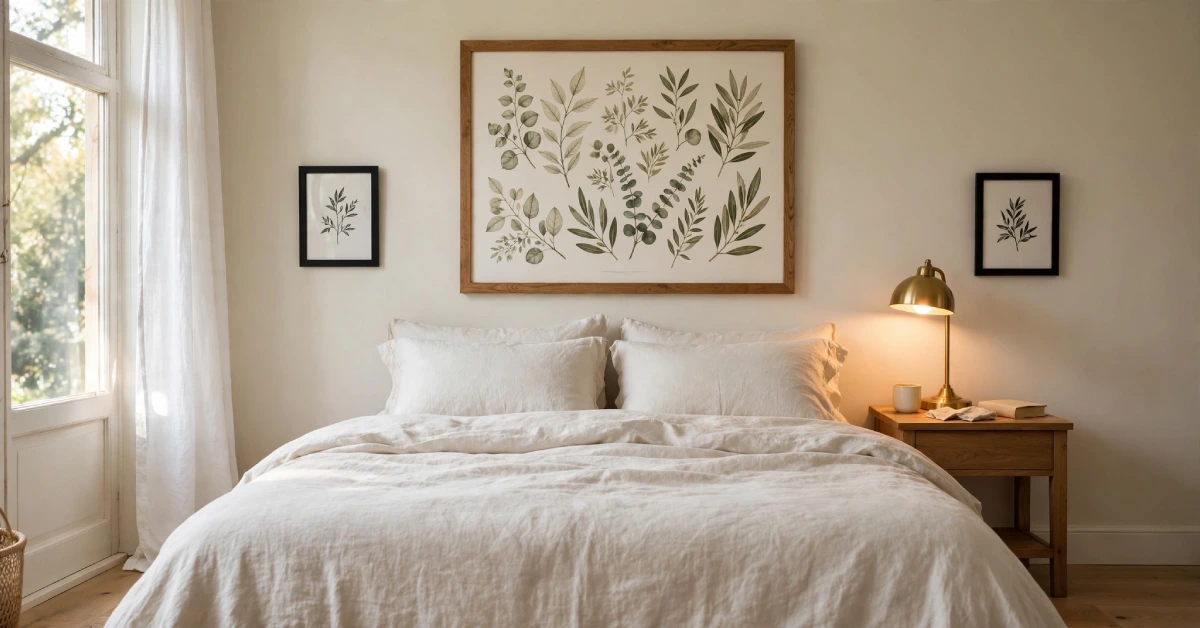
Posters on a bedroom wall add colour and personality for a fraction of the cost of framed art. The best results come from choosing a size that fits the wall, picking a palette that supports rest, and hanging prints at eye level above the headboard or beside a dresser. The guide covers placement, sizing, and safe hanging.
You wake up and go to sleep in your bedroom every day, so the walls in that room get more attention than most. A thoughtful poster can make the space feel finished. A poor choice can make it feel cluttered. This guide shows you how to get the first result.
Why Posters Work Well in Bedrooms
Posters are one of the simplest ways to decorate a bedroom. They cost far less than original canvases, and they come in almost any style. You can find botanical prints, minimalist line drawings, vintage travel posters, and abstract colour studies without a long search.
They also change easily. When your taste shifts or the seasons turn, you can swap one print for another in a few minutes. That flexibility suits a room that people redecorate more often than the living room or kitchen.
Many households already display art of some kind. A YouGov survey found that 79 percent of Americans have artwork on the walls of their homes, and photographs and paintings are the most common choices. Posters are especially popular with younger adults. The same survey found that 32 percent of millennials have a poster on a wall at home, compared with 13 percent of people aged 55 and over.
Choosing the Right Posters for Your Bedroom
Start with the mood you want the room to carry. Soft neutrals, warm beige, and muted greens suit a space built for rest. Brighter graphics and bold colour work well in a bedroom that doubles as a study or a creative corner.
Choose subjects you will still like in a year. Landscapes, botanical prints, and abstract designs tend to hold their appeal. Quote posters and pop culture prints can feel dated quickly, so buy them with care, especially if you share the room with someone else.
Match the poster to your existing palette. Pull one accent colour from your bedding, a rug, or a lamp shade, then look for a print that includes that tone. Keep the rest of the wall calm so the room does not feel busy.
Check the print quality before you buy. Thin paper wrinkles easily and can fade within months. Look for sellers that list paper weight, ink type, and fade resistance. Heavier matte or semi-gloss paper usually holds up better. Glossy finishes can reflect light from bedside lamps, which may be distracting at night.
Best Places to Hang Posters in a Bedroom
 Layouts That Make Posters Look Planned
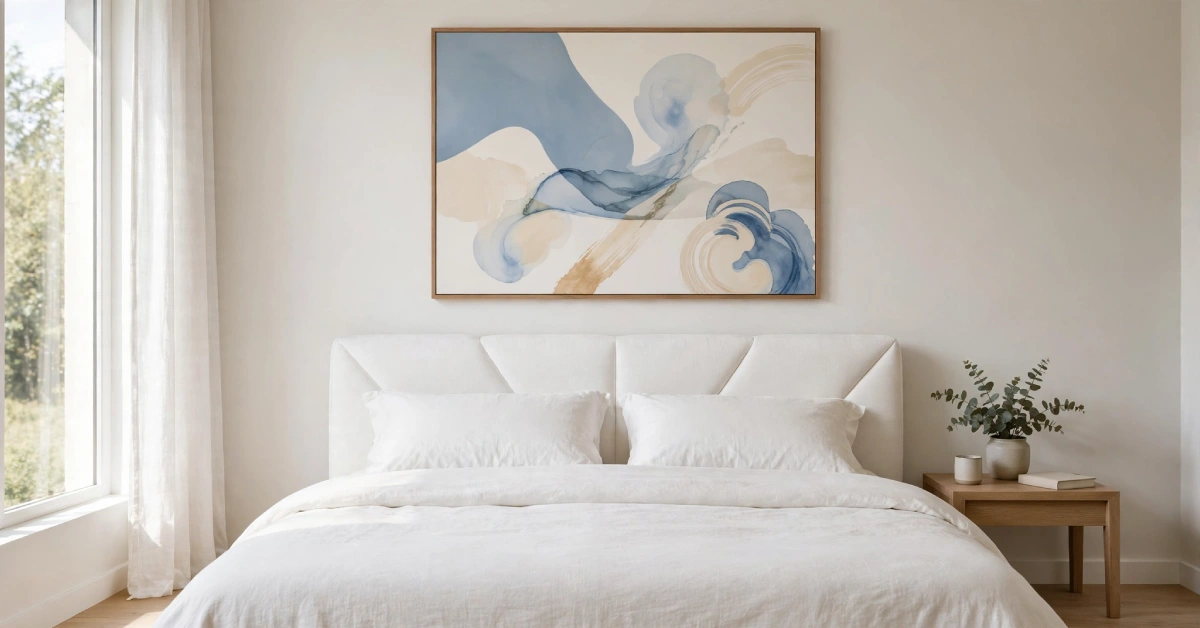
The headboard wall is the most popular choice. A single large poster or a matching pair centred above the bed creates a clear focal point. Leave about 15 to 20 centimetres (6 to 8 inches) between the top of the headboard and the bottom of the frame so the art does not feel crowded against the bed.
The wall beside a dresser or desk suits smaller prints. Group three to five posters in a loose row at the same height. This works well in a room with limited wall space, and it keeps the furniture from looking lost.
The wall opposite the bed is another good option. It gives you something to look at from your pillows. Since this wall is often the first thing you see when you wake up, choose calmer images for it.
Avoid a few spots. Do not hang posters directly above a radiator, since heat can warp paper and dry out frames. Keep prints away from windows that get strong direct sun, because light fades ink quickly. Also check that a door does not swing into the artwork when it opens.
Sizing Posters for Your Bed and Walls
Measure before you buy anything. Find the width of your headboard, then decide how much of that width you want the poster to cover. A piece that spans about two-thirds of the headboard usually looks balanced. On a queen bed, that means a poster roughly 100 centimetres (40 inches) wide.
For a wall with no headboard, measure the open space and mark the outline with painter’s tape. Use the tape to visualise the size before you buy. Leave generous margins on each side. A common rule is to keep at least 15 centimetres (6 inches) between the art and the nearest corner or piece of furniture.
Height matters as much as width. For most bedrooms, the centre of a poster should sit at roughly 150 to 160 centimetres (60 to 63 inches) from the floor. This places the art near eye level for an adult standing in the room. If the poster hangs above a bed, you can raise it slightly so that it stays in proportion to the mattress and bedding.
Scale also depends on the room. In a small bedroom, one medium print often looks better than several small ones. In a large room, a single oversized piece can anchor the space without making it feel crowded.
Layouts That Make Posters Look Planned
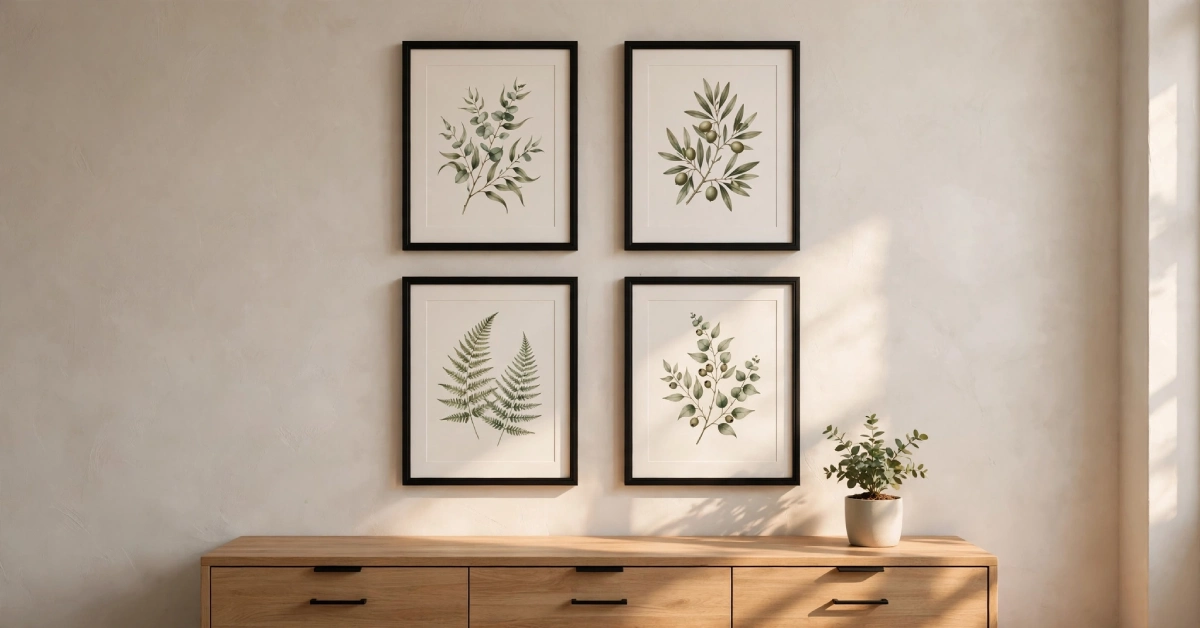
A gallery grid works well for a wall with several prints. Choose frames of the same size or a close match. Keep the spacing even, about 5 centimetres (2 inches) between frames, so the group reads as one display. Lay the posters on the floor before you hang anything, and check how the arrangement looks from the bed.
A single statement piece is the simplest layout. Pick one poster with strong colour or a clear subject, then pair it with matching bedside lamps. This approach suits people who want a clean room with a clear focus.
Mixed sizes can look intentional if you plan them carefully. Combine one tall print with two smaller ones, and align either the bottom edges or the centres. Keep the total width of the group within the width of the bed or dresser below it.
Frames tie the room together. Black, white, or natural wood frames suit most palettes. If your posters are unframed, use a simple frame or a clip-style hanger so that the paper stays flat and the edges look neat.
Lighting and Colour Choices for Restful Rooms
Lighting changes how a poster looks. A print that seems bright in daylight can look dark at night. Test your layout in both daytime and evening light before you commit. If the wall gets little natural light, choose lighter posters with warm tones to keep the room from feeling heavy.
A reading lamp placed near the art can add depth. Aim the light at the poster from above or the side, and avoid placing the lamp so that its glare falls directly on the glass of a frame.
Colour also sets the tone. Cool blues and soft greens are often chosen for bedrooms because they feel calm. Deep reds and bright oranges create energy, so they work better on a wall you see mainly during the day. The right choice depends on how you use the room, so think about your routine before you decide.
Styling Posters in Small or Shared Bedrooms
Small bedrooms need restraint. Choose one or two posters, hang them at a consistent height, and keep the frames simple. Too many images can make a tight room look cramped. A single large print often does more than three small ones.
Shared bedrooms call for agreement. Talk about the style and subjects before you buy. Pick a neutral frame style and a colour palette both people like. Each person can add a smaller personal piece on a separate wall or a dedicated corner. This keeps the room balanced without forcing one person’s taste on the whole space.
Teen bedrooms often change quickly. Choose posters that are easy to remove and replace. Adhesive hangers or a simple cork board frame can keep the wall flexible as interests shift.
How to Hang Posters Without Damaging Walls
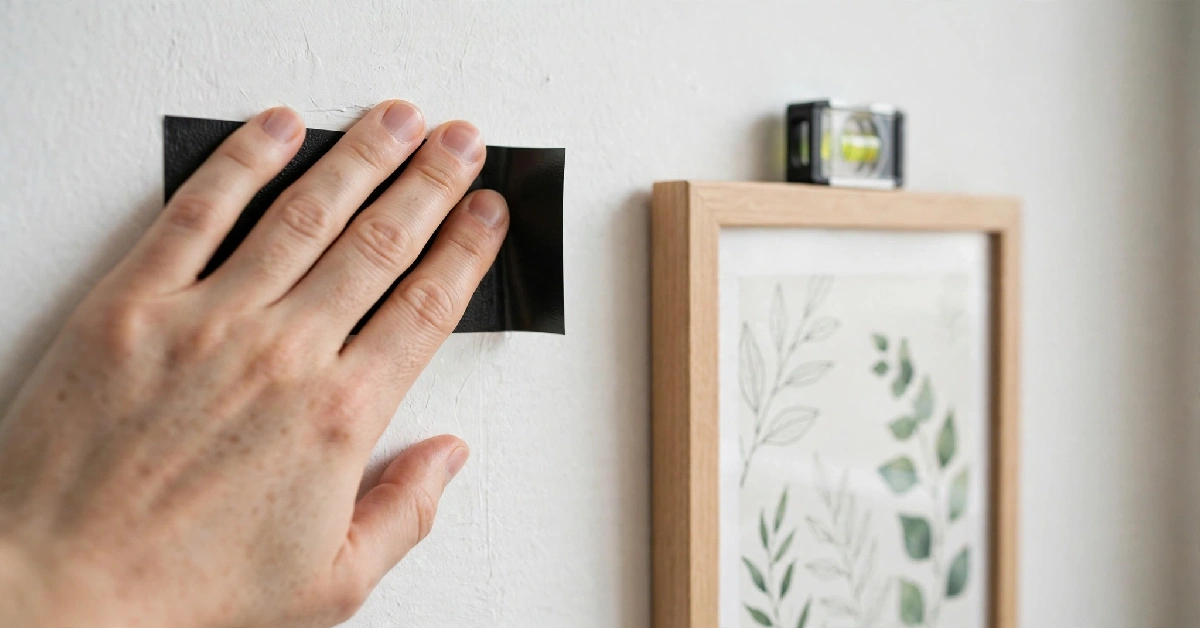
Renters have good options. Adhesive picture-hanging strips rated for the weight of your frame hold most posters and remove cleanly when you follow the package directions. Press firmly for about 30 seconds, then wait the recommended time before you hang the frame. Follow the rated weight on the package and do not exceed it.
Heavier frames need proper support. Use a stud finder to locate wooden studs, and drive screws into the stud when possible. If the stud does not line up with your layout, use wall anchors rated for the weight of the frame. Check the weight rating on the hardware before you buy it, and leave a margin below the maximum load.
Use a level for every hang. A small bubble level or a level app on your phone helps you keep the frame straight. Mark the spot with a pencil on painter’s tape, then remove the tape after you drill.
Check your lease before you use adhesive or nails. Some landlords ask tenants to avoid any wall damage, while others allow small nail holes. If you are unsure, ask before you hang anything, since repairs can come out of your deposit.
Budget Tips for Buying Bedroom Posters
Plan your budget by wall, not by piece. Decide how many posters you need, then set a total spend for the group. This helps you avoid buying one expensive print that does not fit the rest of the room.
Buy quality where it counts. A better print on heavier paper often lasts longer than several cheap ones. Spend a little more on the piece that will hang above the bed, since it draws the most attention.
Consider frames as a separate purchase. Some sellers include a frame with the print, while others sell prints only. Compare the full cost before you decide. Secondhand frames from local shops can cost less and still look sharp when paired with new prints.
Common Mistakes to Avoid With Bedroom Posters
Hanging art too high is the most frequent error. The centre of the poster should sit near eye level, not near the ceiling. High placement makes the room look unfinished and can make the bed feel small.
Mixing too many styles creates visual noise. Limit the wall to two or three main colours and one or two subject types. A consistent palette helps the room feel calm.
Skipping the test layout wastes time and money. Tape paper cutouts or the actual posters to the wall for a few days before you drill. Look at the arrangement from the bed and from the doorway.
Buying thin, low-quality prints leads to wrinkles and fading. Check the paper weight and the seller’s fade rating. A slightly higher price for better paper usually saves money over time.
Ignoring the light in the room can cause problems. Dark posters on a dim wall can feel heavy, and glossy finishes may reflect glare at night. Check the look in the room’s actual lighting before you commit.
Final Thoughts
Posters give your bedroom a personal look at a modest cost. Choose calm colours that support rest, size the piece to your bed, and hang it at a height that feels natural. Test the layout before you drill, and use hardware rated for the weight. A small, well-planned display often looks more finished than a crowded wall of art.
FAQs
What size poster should go above a bed?
A poster that spans about two-thirds of the headboard width usually looks balanced. On a queen bed, that means a print around 100 centimetres (40 inches) wide. Leave 15 to 20 centimetres (6 to 8 inches) of space above the headboard.
Can I hang posters without making holes in the wall?
Yes. Adhesive picture-hanging strips rated for your frame’s weight work well for most posters. Follow the package directions for cleaning the wall and pressing the strips in place. Check the weight limit before you buy.
How often should I change the posters in my bedroom?
Many people refresh bedroom art every one to three years. You may want to change it sooner if your colour palette shifts or if you move to a new room.
Are posters a good investment?
Posters are an affordable way to decorate, and they are easy to replace. For pieces you plan to keep for many years, consider a higher-quality print or a framed piece with archival paper.